The one thing you should know about Notre Dame Kylemore

This story is part of Notre Dame Global's series titled "The One Thing."

Next in our series, we turn to Notre Dame Kylemore, located in Connemara, an hour’s drive northwest of Galway, and situated on Ireland’s legendary west coast.
We asked Lisa Caulfield—Carmel & Martin Naughton Director of Notre Dame Kylemore, who helped shape the academic center’s distinct identity and has served as its director since the 2016 dedication—what one thing she would like us to know about Notre Dame Kylemore’s programs, achievements, goals, or aspirations.
What is the one thing you want the Notre Dame community to know about Notre Dame Kylemore?
LISA CAULFIELD: In 2016, Notre Dame made a bold and intentional decision to deepen the University’s presence in Ireland by opening a second location in the west of the country. It was a move away from the urban epicenter and toward Connemara—Ireland’s cultural crown jewel—defined by a wild, rugged landscape and a remote, haunting beauty that has inspired artists, writers, and adventurers.
“Ten years later, we can look back on years of coordinating Notre Dame students studying abroad at the University of Galway, Ireland; an impressive number of successful conferences and collaborations; and outreach programming that has focused on using the location as an opportunity for integral development: nourishing the minds, bodies, and spirits of students, faculty, alumni, leaders, thinkers, and creators from Notre Dame, Ireland and around the world.”
LISA CAULFIELD: To begin, I want to emphasize that Notre Dame Kylemore owes its existence to both the vision and generosity of long-time Notre Dame benefactors Martin and Carmel Naughton and the late Sr. Máire Hickey, OSB, the Abbess of the Benedictine community, that has made Kylemore Abbey its home since 1920. One of the oldest religious monastic traditions—one dating from the fifth century—the Benedictine tradition focuses on pax (peace) and ora et labora (pray and work).
Representing the University as we do within this long-established Benedictine community, we believe it is our mission to continue their legacy of education, hospitality, community, and reverence for the land that is central to the Benedictine charism, our partners at Notre Dame Kylemore.
Situated in a remote and isolated landscape that inspired the Benedictines for the last century as a safe place to convene, we have a unique portfolio within Notre Dame Global. The work is threefold: overseeing the study abroad program at the University of Galway; hosting academic conferences, workshops, courses, and graduate seminars for our students and faculty; and programming a large number of what we call "open enrollment” courses—courses for people seeking to continue learning from Ireland and elsewhere to explore themes in leadership, professional development, the arts, and sustainability.


Why is that one thing—achieving success in the unique space of student experience, academic conferences, and open enrollment courses—so important to Notre Dame Kylemore?
“At Kylemore, we have facilitated study and dialogue for Notre Dame faculty and students in subjects as diverse as cancer research, archaeology, ecology, geology, and Irish literature.”
LISA CAULFIELD: Notre Dame at Kylemore has the ability to convene a variety of topics across the disciplines. We have hosted conferences in areas encompassing legal ethics, private law, Catholic Social Tradition, coastal currents, and executive leadership, as well as provided opportunities focused on art, history, and literature, via seminars, workshops, and residencies.
The identity of Kylemore as an abbey—combined with its remoteness, beauty, and quiet—works to create an atmosphere that not only encourages community but facilitates difficult conversations. To illustrate with just three examples:
In spring 2025, Notre Dame Kylemore was the site of an unprecedented gathering: magistrates from La Jurisdicción Especial para la Paz (JEP) (the Special Jurisdiction of Peace in Colombia) met with members of Ireland’s Independent Commission for the Location of Victims’ Remains. Convened by the Legacy Project at the Kroc Institute for International Peace Studies in Notre Dame’s Keough School of Global Affairs, the subject was how decision-makers within mechanisms of transitional justice—bodies that focus on reparations and victims’ experiences rather than punitive justice—encourage truth-telling.

Pictured: Lisa Caulfield; Daniel Schwake, director of Notre Dame Jerusalem; H.B. Cardinal Pierbattista Pizzaballa, OFM, Latin Patriarch of Jerusalem; Gabriel Schwake; and Clemens Sedmak, director of the Nanovic Institute for European Studies.
In June 2024, Notre Dame Kylemore, together with Notre Dame Jerusalem and the Nanovic Institute for European Studies, organized a four-day retreat to reflect on the situation in the Holy Land, under the auspices and in the presence of the Latin Patriarch of Jerusalem, H.B. Cardinal Pizzaballa.
And in January 2020, with the Keough-Naughton Institute for Irish Studies and the Royal Irish Academy, we were the site that convened the first gathering of academics, journalists, and practitioners from the North of Ireland and the Republic of Ireland to discuss yet another complicated topic: the future of the island of Ireland, whether governed by two governments or unified into one. That initial discussion has evolved into the highly successful ARINS Project (Analysing and Researching Ireland North and South).
What does that one thing reveal about both Notre Dame Kylemore and Ireland?
“As is Ireland itself, at Notre Dame Kylemore, we are leaning into the arts and sustainability—into the healing of the world.”
LISA CAULFIELD: Ireland has an incredible patronage and reverence for the arts, as well as a history of pushing artistic boundaries. With internationally renowned authors, poets, and playwrights ranging from W.B.Yeats to James Joyce to Marina Carr and Claire Keegan, Ireland has been and continues to be at the forefront of how the world interprets history and trauma, as well as how it engages in healing.

At Notre Dame Kylemore, we join in Ireland’s reverence for the arts and its commitment to healing across artistic, literary, and environmental spheres—as well as in the political and social spheres mentioned above.
For example, many of Ireland’s leading authors participate in the annual summer graduate student seminar, “Immagallamh,” sponsored by our frequent collaborator, the Keough-Naughton Institute for Irish Studies, and in our undergraduate creative writing intensive, which has been co-taught for years by Marina Carr and Dionne Irving Breymer.
The healing extends to our programs in sustainability and reverence for the land with our Laudato Si’ retreats. During the summer, we offer three immersive four-week undergraduate courses focused on themes of healing: Compassionate Care in Medicine, Contemplative Ecology, and Medical and Veterinary Parasitology, in a place where the sheep outnumber the human population. Kylemore has proven to be a perfect laboratory for learning across the disciplines.

For undergraduate students during the academic year, we offer opportunities for cancer and environmental research during their study abroad program in Galway, as well as less structured opportunities extended to all Notre Dame students in Galway and Dublin, for retreats and explorations of Kylemore and Connemara.
And, with local partners, we have a long list of collaborations. I am excited about a major one this summer—our Threshold Arts Festival, a four-day event from July 30 to August 2, 2026, that brings together scholars, artists, and enthusiasts from around the world to an immersive academic arts celebration centered on the works and legacy of William Butler Yeats.
Learn more about the work of Notre Dame Kylemore and the University of Notre Dame’s global network, or browse related articles:
- Nanovic Sustainability Fellowship selects two students to carry out environmental research during their semester abroad in Galway
- Ireland field experience connects aspiring veterinarian to the heart of Irish horse racing
- “It’s All Yours:” Notre Dame student Libby Garnett reflects on the Kylemore Creative Writing Summer Program
Learn more about the collaborative work and partners of Notre Dame Kylemore
Study Abroad in Galway offers opportunities for students in the arts, business, humanities, sciences, and social sciences... and features a unique research experience module for science students
Notre Dame Kylemore is the liaison for Notre Dame students who choose the University of Galway for their study abroad experience. Recognized globally, the University of Galway offers opportunities for students in all disciplines.
One unique program for science students is the research experience module, awarding three Notre Dame science credits. Students are paired with a principal investigator for the semester and not only engage in cutting-edge research, but are encouraged to publish, present at conferences, and network for graduate school. A particular strength of Galway is oncological research, which offers the bonus of Galway’s collaboration with Notre Dame’s Harper Cancer Research Institute through the Biseach Initiative.
Headed to the Indiana University School of Dentistry after graduation this year, Madelyn Cerney ’26 speaks of her semester in Galway, saying, "Through the semester research module, I was placed in a microbial ecology lab that explores microbial communities in low-temperature anaerobic digestion. My mentor was extremely supportive, and by the end of the program, I was competent in a variety of new lab techniques and felt like a valued part of the team. The module was a highlight of my study abroad experience. In addition, Kylemore was a wonderful retreat from the hustle and bustle of class in Galway. It allowed me to bond with other people in the program and to explore the beautiful nature of Connemara.”
Magistrates from Colombia’s Special Jurisdiction of Peace meet with Ireland's Independent Commission for the Location of Victims' Remains
In fall 2025, Notre Dame Kylemore was the site of an unprecedented gathering: magistrates from Colombia’s Special Jurisdiction of Peace (La Jurisdicción Especial para la Paz) met for discussions with members of Ireland’s Independent Commission for the Location of Victims’ Remains, peace process negotiators, and public representatives.
Under the banner “Pursuing Post-Accord Justice: Comparative Insights from Colombia, Northern Ireland, and the Republic of Ireland”, the three-day meeting was convened by the Legacy Project at the Kroc Institute for International Peace Studies in Notre Dame’s Keough School of Global Affairs and led by its director Josefina Echavarría Álvarez, professor of the practice and director as well of the Peace Accords Matrix (PAM).
“Silencing the guns does not mean closure when it comes to conflict,” says Echavarría Álvarez.
“I chose Notre Dame Kylemore as the site to hold an intimate and meaningful conversation about legacy issues: How do decision-makers involved with mechanisms of transitional justice deal with matters of pursuing justice and reconciliation, truth-telling and silence, as well as institutional coordination and public communication?
“The questions are critically important. Much of the violence and conflict in both Colombia and Northern Ireland might be officially over, but the memories and wounds are not a thing of the past. As time goes by without full acknowledgement of what happened and reckoning of the events and impact they had on generations, we are missing key opportunities to find a renewed sense of self, place, and common humanity. We have various mechanisms designed and active that can help societies and communities come closer, listen to one another, and engage with the challenges of peacebuilding and healing.
Echavarría Álvarez points out that the experiences shared from Colombia with Northern Ireland are embedded in the framework of restorative justice, a kind of justice that, rather than focusing on punishing the perpetrators, seeks to heal and repair the harm done to victims and communities.
“Notre Dame Kylemore provided us with a container for these discussions on truth-telling and justice-seeking,” continues Echavarría Álvarez. “Kylemore possesses an incredible capacity to help participants focus on the issues at stake. It creates a space in which individuals under great pressure can open up and share their challenges, fears, and lessons they have learned.
“What makes Kylemore different from any other university conference center is not just the immense beauty of its landscape. It is also its identity as an abbey. In the gardens, the grotto, the lake, and the chapel, people find an explicit spiritual connection—one that is conducive to profound, transformative work, and to the generous sharing of perspectives.
“I felt this power myself on my first visit to Kylemore several years ago. After an inspiring conversation with the sisters living in the abbey, we were all given a copy of the Rule of St. Benedict. I keep the book in my office library and open it every now and then—perhaps more often than I anticipated. Its pages are a search for spirituality, balance, and community in everyday practices. I regularly focus on reminding myself of the practice of discernment, which is grounded in deep listening, a call for quieting the inner voice, and one that allows me to connect more honestly with suffering in the world. In this manner, I find at Kylemore a spiritual dimension that is full of humanity. It is that connection that makes Notre Dame Kylemore so unique to me and many other peacemakers—a combination of nature, spirituality, and a call of being that is at the very heart of the mission of the University of Notre Dame."
Threshold Arts Festival
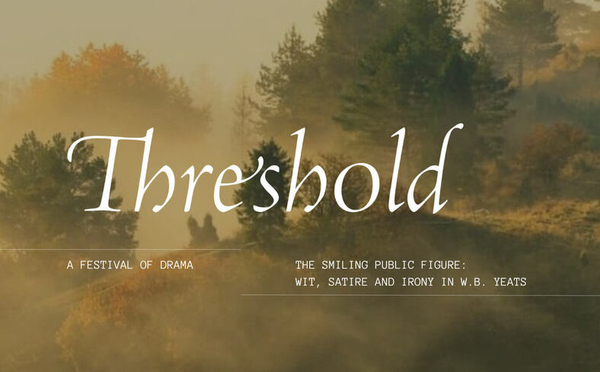
In summer 2026, years of collaborative work by Kylemore and several partners will bear fruit in the Threshold Arts Festival, a four-day event in late July through early August that brings together scholars, artists, and enthusiasts from around the world to an immersive academic arts celebration. The Festival’s aim is to explore the rich literary legacy of poet and playwright William Butler Yeats through a variety of media to foster a deeper understanding of his contributions to literature and Irish cultural identity. The event will feature academic lectures, visual arts, music, dramatic performances from the Abbey Theatre, new work by Wexford Festival Opera, and a celebration of the culinary arts with “A Taste of Connemara,” curated by the Notre Dame Kylemore chefs themselves.
An added dimension is participation in Notre Dame's new Arts Initiative. With recognition of the transformative power of the arts, the Initiative aims to strengthen interdisciplinary arts research and creative practice, enhance opportunities for students to engage with the arts on and beyond campus, and deepen artistic collaboration at Notre Dame, in the region, and with new national partners.
Originally published by at global.nd.edu on June 25, 2026.